
Cybersecurity Awareness in 2026: What Every Professional Needs to Know
Cybersecurity awareness is no longer optional for professionals. In 2025 alone, AI-powered deepfake fraud cost businesses an estimated INR 70,000 crore across the region, and the cyber landscape saw a notable rise in infected systems driven by the increasing adoption of Malware-as-a-Service operations. The threat is real, it is growing, and it is no longer confined to the IT department.
If you work in a digital environment, which is virtually every professional today, understanding how cyberattacks happen and how to protect yourself is now a core professional skill.
What Is Cybersecurity Awareness and Why Does It Matter in 2026?
Cybersecurity awareness refers to the knowledge and habits that help individuals and organisations protect themselves from digital threats. It covers everything from recognising a phishing email to understanding how cybercriminals exploit human behavior to bypass even the most advanced security systems.
Cybercriminals, empowered by AI and automation, now launch attacks in hours instead of months, making them faster, stealthier, and more persistent. Building a strong human firewall through awareness and training is as critical as deploying advanced technologies.
The shift is significant. The region is now among the most targeted globally for email-based attacks, and total security spending across Asia is projected to reach $4.4 billion in 2026. Governments and regulators are responding fast, with new cybersecurity legislation expanding risk management obligations and proactive security requirements across critical infrastructure.
Regulation is catching up. But individual awareness remains the single biggest gap.
How Cyberattacks Actually Happen: What Most Professionals Do Not Know
Most cyberattacks do not begin with a sophisticated technical breach. They begin with a human mistake.
A finance manager receives a call from someone who sounds exactly like their CEO – urgent, authoritative, asking for an immediate fund transfer. The voice is a deepfake, cloned from a 30-second audio clip found online. The transfer goes through. The CEO never made the call.
This is not hypothetical. Deepfake scams targeting professionals are now one of the fastest-growing categories of cyber fraud across Asia. And they are just one example of how cybercrime has evolved.
Common attack vectors that professionals need to understand include:
Phishing attacks: Deceptive emails or messages that impersonate trusted contacts or organisations to steal login credentials, financial information, or access to internal systems. According to the 2025 Verizon Data Breach Investigations Report, phishing is the leading cause of data breaches globally.
Deepfake fraud: AI-generated audio or video used to impersonate executives, colleagues, or family members to authorise transactions or extract sensitive information.
Social engineering: Manipulating individuals into divulging confidential information by exploiting trust, urgency, or authority – without any technical hacking required.
VPN-masked attacks: Cybercriminals routing activity through VPNs to mask their location and identity, making it harder to trace the source of an attack.
Malware-as-a-Service: Pre-built attack tools available for rent on the dark web, lowering the technical barrier for anyone looking to launch a cyberattack.
What Is Digital Forensics and Why Should Professionals Care?
Digital forensics is the science of recovering, analysing, and presenting digital evidence from devices, networks, and cloud systems – typically after a cyber incident has occurred.
Most professionals assume that once a cyberattack happens, the trail goes cold. In reality, every digital action leaves a trace. Forensic investigators can recover deleted files, trace IP addresses across borders, identify devices used in an attack, and in many cases, identify the person behind a VPN or a masked digital identity.
For professionals and organisations, understanding the basics of digital forensics matters for three reasons:
- Incident response: Knowing what to preserve and what not to touch in the immediate aftermath of a breach can determine whether a forensic investigation succeeds or fails.
- Legal accountability: Digital forensic evidence is increasingly being used in corporate litigation, fraud investigations, and regulatory proceedings across the region.
- Risk prevention: Understanding how investigators trace attacks helps organisations and individuals understand which behaviors leave them most exposed.
AI and Cyber Threats: A Double-Edged Reality
Artificial intelligence is reshaping cybersecurity in ways that cut both ways.
On the defensive side, AI-powered threat detection can now identify anomalies, flag suspicious behavior, and respond to incidents in real time – far faster than any human team could manage manually. Top cybersecurity trends in 2026 highlight the need for proactive protection, including AI-driven threat detection, cloud security, ransomware resilience, and continuous monitoring.
On the offensive side, AI has dramatically lowered the skill barrier for cybercriminals. Phishing emails that once had obvious grammatical errors are now indistinguishable from legitimate communication. Voice cloning tools can replicate a person’s voice from publicly available audio. Deepfake video technology can fabricate meetings, instructions, and authorisations.
AI is being explored for both threat detection and managing large volumes of data. The challenge is not just choosing tools – it is making them work together.
For professionals, the practical implication is this: the same technology that is making your organisation’s security smarter is also making the attacks against it more convincing. Awareness of both sides is essential.
Cybersecurity Best Practices Every Professional Should Follow
Staying cyber safe does not require a technical background. It requires consistent habits and the discipline to apply them.
Verify before you transfer. Any financial transaction request received via phone, email, or messaging app should be verified through a separate, known contact channel before being actioned – regardless of how urgent it seems.
Enable multi-factor authentication (MFA) everywhere. In 2025, a major financial institution prevented a breach by enforcing MFA for all employees, stopping attackers even after passwords were compromised. MFA is not foolproof, but it eliminates a significant proportion of attacks.
Check the domain, not just the display name. A sender’s display name can be spoofed in seconds. Always verify the actual email domain before clicking links or sharing information.
Be careful what you share publicly. Your job title, team structure, travel plans, and professional relationships are all data that can be used to craft a targeted social engineering attack against you.
Know your organisation’s incident response process. If something looks wrong, who do you call? What do you do first? Having this answer before an incident occurs dramatically improves your ability to respond effectively.
The Leadership Dimension: Why Cybersecurity Awareness Is a Management Issue
The cybersecurity landscape has undergone a fundamental transformation in recent years, marking a shift from awareness to accountability. This shift is happening at the organisational level too.
Leaders set the culture. When a manager clicks unverified links, skips two-factor authentication, or dismisses security protocols as inconvenient, that behavior signals to the entire team that security is optional. Conversely, leaders who treat cyber hygiene as a professional standard create teams that do the same.
As regulatory expectations around data protection and AI governance continue to rise, professionals with strong knowledge of compliance frameworks and ethical technology practices are increasingly valued.
The organisations most resilient to cyber threats are not necessarily those with the biggest security budgets. They are the ones where every person, at every level, understands the basics – and takes them seriously.
Learn From One of Asia’s Leading Cybercrime Investigators – Live
Understanding cybersecurity in theory is valuable. Hearing how real cybercrime cases were investigated and solved is something else entirely.
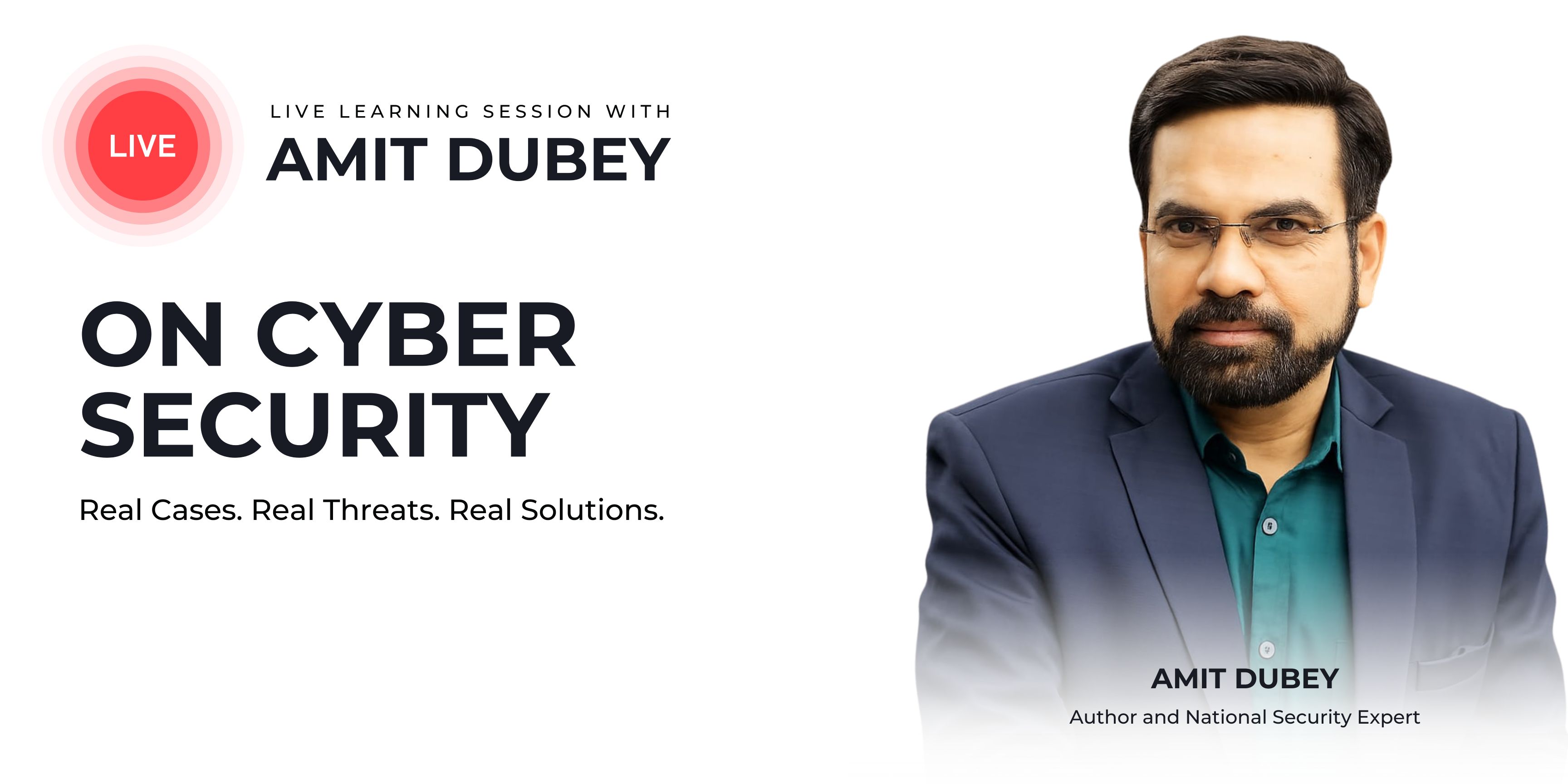
On 25 September 2026, SpeakIn hosted a Live Learning Session with Amit Dubey, one of Asia’s foremost cybersecurity and digital forensics experts. With over two decades of experience working alongside law enforcement agencies, government bodies, and enterprises, Amit has investigated some of the most complex cybercrime cases across the region.
In this session, he will cover real investigation cases solved using AI, how deepfakes and VPN-masked criminals are traced, practical steps to protect yourself and your organisation, and how AI is changing both the threat landscape and the tools available to defend against it.
Register here: https://www.speakin.co/LiveLearningDetails/cyber-security-digital-forensics-in-todays-era.html
SpeakIn is Asia’s largest expert learning platform, connecting professionals with global thought leaders through live sessions, coaching, and curated learning experiences.


